I’ve been talking about Romantasy in terms of how the label is used for what feels like forever. Unfortunately, the
I’ve been talking about Romantasy in terms of how the label is used for what feels like forever. Unfortunately, the conversation usually gets diluted by people offering different definitions and the real meaning gets lost. This was brought back to my attention this week when I came across this TikTok.
Before I dive into this, though, let’s look at the difference between how Romantasy is treated culturally and how the genre is defined. Penguin Books says:
“Romantasy is a fusion of romance and fantasy, where both elements are essential to the story. In these books, the worldbuilding and the relationship develop side by side, each shaping the other as the plot unfolds.”
Source
This is how I’ve always understood what Romantasy meant. The problem comes from how the label Romantasy is used and perceived. In my experience, I’ve seen it used as more of a marketing ploy, which has led to more than one book being mislabelled. Then there’s the cultural perception, historically, romance has always been treated as lesser and women have been shamed for consuming it, and this has also become true for Romantasy. It’s often criticised for prioritising romance over fantasy, just look at my rebuttal from a recent Guardian article where Romantasy was reduced to “fairy porn”.
Which leads me back to the TikTok I saw this morning. @stevenaitchisonbook says:
“I’ve just been called out on social media, and I’d love to know your thoughts on this. So somebody called me a misogynist because I’d done a top 20 list of high fantasy books of all time. Using a criteria on Goodreads, there was three separate parameters and putting them all together to collate them. And the top 20, there was 20% of them were female authors. I took Romantasy out of the equation because Romantasy is a different genre”.
I can immediately see why this has annoyed people; it’s annoyed me as well, and for several reasons. The way he’s categorised Romantasy: it’s not a separate genre; it’s a subgenre that bridges fantasy and romance.
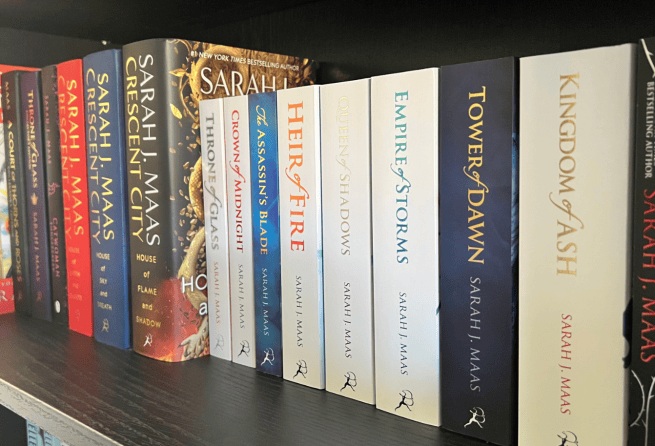
He doesn’t seem to have taken into account that culturally, female-written fantasy often gets the Romantasy label, while men’s writing just gets Fantasy. There are countless examples of this, take Throne of Glass: yes, there are romantic elements in the story, but it isn’t its defining theme and it’s not essential to the story. If the romantic relationships were removed, there is still a story being told. This also ties into him arguing that Game of Thrones is just fantasy because romance is not the main focus. Throne Glass follows much the same path. So, his counterargument falls apart here.
There are also more recent examples of how the label has bypassed male authors, for example, some could argue that Empire of the Vampire by Jay Kristoff or Yumi and the Nightmare Painter by Brandon Sanderson could be considered Romantasy, but these books are marketed and sold as fantasy. As a member of the bookish community, it’s disappointing that he doesn’t understand the wider conversation around this.
If you are deliberately removing Romantasy from your definition of Fantasy when the above is true, then surely his figure of 20% is partly a product of the choices he made?
He then goes on to say:
“Somebody called me a misogynist for not putting Romantasy in just because it’s written by female authors. Number one Romantic is a genre distinction not fucking gender distinction. Number two there’s plenty of male authors who write romance and Romantic books and suggesting that removing Romatasy somehow means removing women seems more rather sexist than the list itself”
Firstly, he’s treating genre and gender as if they are two different variables, but what people are criticising is that gender influences the way genre is perceived, marketed and categorised. So yes, genre as a classification isn’t gendered, but the culture surrounding genres is.
Secondly, using the “men write romance and romance books” is flawed; nobody is questioning that men can write this. Instead, what is being interrogated is that the fact that the way female writing and male writing get treated is different.
I don’t know this person; I can’t say for sure whether he is or isn’t misogynistic, but his viewpoint on this is short-sighted and inherently flawed.
I think the real question is: Why is Romantasy now being treated as something separate from Fantasy? Is it because, culturally romance has been treated as lessor, so adding heavy romantic themes to Fantasy somehow now diminishes the story that’s being told?


You must be logged in to post a comment.